
The Ottawa County Route from Address to Property Owner
A short chain of official sources answers the ownership question. Each step holds the same situs address and legal description. That consistency keeps a shared surname or a near-match street from pulling the search onto the wrong tract.
- Enter the street number and name in the Ottawa County Treasurer tax search.
- Copy the CAMA or parcel key, legal description, and Current Owner or Taxpayer label.
- Check the Ottawa County Appraiser record and note its displayed database update date.
- Confirm the grantee on the newest matching deed through the Register of Deeds.
- If the deed names a company, check that exact entity in the Kansas Secretary of State search.
Ottawa County Separates Current Owner from Taxpayer
The free Treasurer search offers an Owner or Taxpayer Name field and a match choice among Current Owner, Taxpayer, or Both. Start with the last name alone. That advice helps when someone other than the titled grantee pays the bill.
A taxpayer entry may point to a trust, estate, lender, or tax service. It is a payment arrangement, not proof of title. Run the query in both modes. Then compare the exact parcel and legal description before drawing any conclusion.
Why an Ottawa County Owner Name Can Lag a Deed
The Appraiser sets a new value for each parcel every year. It also physically verifies parcels on a six-year cycle. Its portal posts a dated update notice. The Treasurer maintains its own separate update schedule. Those cycles hint at freshness, yet a just-recorded transfer can still miss every roll.
For a recent sale, the newest recorded instrument is the final check. The current owner record guide covers that present-tense verification in more depth.
Date any result you save. The Appraiser landing page and the Treasurer database show separate update notices. Two official screens opened the same day can sit at different processing points. A date stamp turns that apparent conflict into a clue about which office to call.
The Ottawa County Appraiser Starting Screen
The Ottawa County CIC Appraiser portal opens with registered-user sign-in fields, a public-user continuation, and a dated database notice.
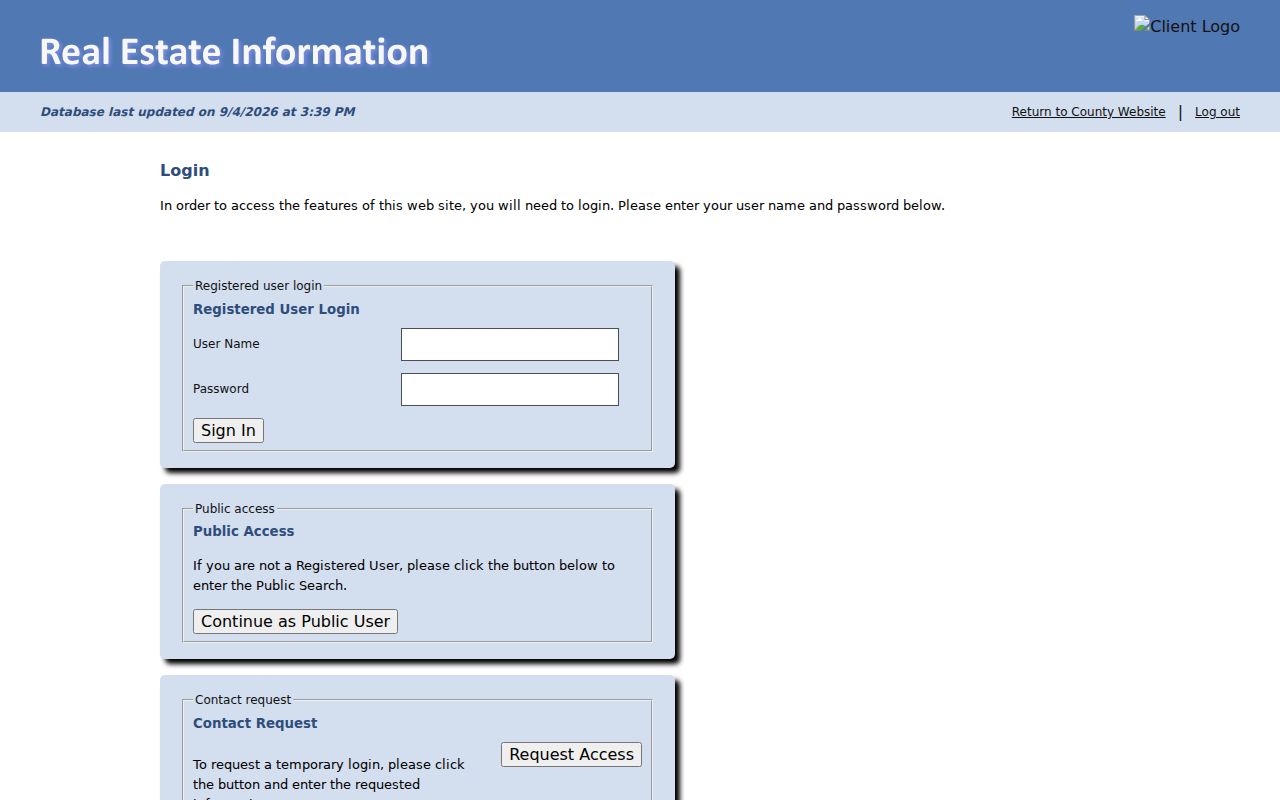
The public continuation is a limited-access step. If an owner result does not open there, fall back to the Treasurer form or a direct Appraiser request.
Ottawa County Sources That Identify a Property Owner
No single database answers everything. The assessment roll is the quick lead. The newest deed is the recorded confirmation. The Secretary of State explains a business name, while GIS stays supporting map context rather than an owner source.
| Source | Owner Info It Gives | Access |
|---|---|---|
| Appraiser and tax roll | Current-owner or taxpayer lead, situs, legal description, parcel key | Public portals or Appraiser request; check update date |
| Register of Deeds | Grantee on the latest deed affecting the same legal description | Office records; Laredo and Tapestry named by county |
| Kansas business search | Entity status, business ID, filings, and resident-agent result | Free state search; first 200 matches displayed |
| ORKA resources | Parcel-map context where county data is complete | Statewide service; Ottawa owner popup not verified |
A property owner is whoever holds the recorded interest. The occupant could be a relative, a guest, or a buyer waiting on record updates. Public property files are not a directory of who is physically present.
Tracing an LLC or Trust That Owns Ottawa County Land
When a tax result or deed names an LLC, copy the exact spelling and punctuation. Enter it into the Kansas Business Entity Search. Search by entity name or business ID. Review the status and filed records. The resident-agent hit is an entity contact clue, not personal title to the parcel.
For a trust or estate, search the deed under the exact wording. Use the trustee, executor, administrator, or estate name. Instruments such as executor deeds, administrator deeds, beneficiary transfers, survivorship affidavits, and correction deeds often surface in these cases. They can explain why a plain surname search failed.
Confirm Who Owns with the Ottawa County Deed Index
The Ottawa County Register of Deeds safeguards permanent land records. These include deeds, mortgages, releases, liens, plats, and easements. Its county page names Laredo Anywhere and Tapestry. No official local online cutoff or exact image coverage is published.
Search the roll name as grantee. Then match the most recent deed by legal description and recording date. If online coverage stays unclear, visit during regular office hours. You can also ask about the earliest online book, image availability, and older book access. The office does not conduct title searches or give legal advice.
A good office request includes a date range. Add the parcel's full legal description and the candidate grantee name. Ask how the index is arranged. It may be by grantor and grantee, book and page, or instrument number. Also ask whether an image or certified copy is available. Never infer an online cutoff from a vendor's national help page.
Kansas Address Protection Limits Owner Research
Kansas Safe at Home gives eligible victims a substitute address for public records. It also provides mail forwarding. K.S.A. 45-230 also limits commercial use of public-record names and addresses. Both rules matter even when a tax or deed record is otherwise open.
Keep an owner lookup inside lawful property research. Examples include purchase due diligence, an easement question, estate work, or deed-fraud review. Never publish or use a protected address to target a person.
The Register of Deeds also links a free Property Fraud Alert service. An alert flags a matching name in a newly recorded document. It cannot block a filing or guarantee title. When an alert arrives, review the actual instrument with the office.
What an Ottawa County Ownership Lookup Cannot Prove
An Ottawa County lookup has real limits. The tax roll shows a name, not the full story behind a property. Roll entries cannot expose every interest. They cannot catch an unrecorded claim. They also cannot fix a boundary dispute between neighbors. A deed may carry mortgages, easements, liens, court orders, or corrective instruments filed later. Title work by a professional is the only way to answer that with confidence. For most questions, though, the property records still help. They give you a solid place to start on who owns a parcel.
Ownership limit. An Ottawa County property owner name is a research lead, not a title opinion; never use owner data to harass or harm anyone.
- Owner of record
- The person or entity shown by the relevant county roll or recorded instrument.
- Grantee
- The party receiving an interest in the deed being examined.
- Title
- The legal ownership interest, which may include rights and burdens beyond one database field.
- Situs address
- The property's physical location, which may differ from the owner's mailing address.